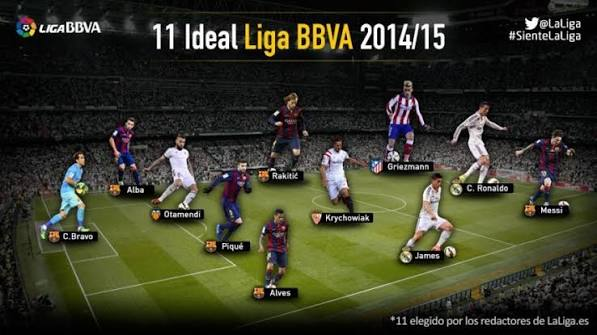

La Liga 2014–15 is remembered for attacking fireworks, yet its defensive structures quietly created a set of teams whose matches often made logical sense for under bets rather than goal-fests. When you look past highlight packages and focus on goals conceded, passing control and game tempo, you can see which sides consistently compressed scoring and when it was rational—not just brave—to stake money on lower totals. Understanding those mechanisms turns “playing the under” from a gamble against entertainment into a decision anchored in how certain teams actually managed space and risk.reddit+2
Why focusing on defensive teams is a reasonable way to find unders
Betting unders can feel uncomfortable because it goes against the natural bias toward goals, especially in a league featuring Cristiano Ronaldo and Lionel Messi at peak productivity. Yet defensive numbers from 2014–15 show that some teams consistently limited danger: Barcelona conceded only 21 league goals across 38 matches, keeping 23 clean sheets, while others like Atlético and Valencia built strong records on compact organisation rather than constant attacking. When a side repeatedly restricts opponents to low-quality chances and sustains long runs of low-conceding games, the impact on goal totals becomes structural, not random. Targeting those teams shifts your under bets from hoping for “a quiet night” to backing environments where low scores are the natural outcome of stable defensive habits.laliga+3
Which 2014–15 teams genuinely supported an under mindset
From the final season data and club profiles, a handful of teams stand out as defensively friendly to unders. Barcelona’s 21 goals conceded and 23 clean sheets made them the league’s most efficient defensive unit despite their attacking power, often turning matches into one-sided but controlled affairs rather than wild scorelines at both ends. Atlético paired a third-place finish with a reputation for compactness, relying on tight lines and set-piece strength rather than trading punches in open matches, which naturally pulled their totals toward the lower side compared with other top clubs. Valencia and Sevilla also leaned heavily on organisation, with long spells where their defensive records kept them competitive even when their attacks were not firing, providing a base for unders or for trusting them to keep games within narrow margins.statmuse+3
How their defensive traits differed in practice
These defensive sides arrived at low-conceding records through distinct mechanisms that matter for unders. Barcelona defended by controlling possession and field position, completing over 22,700 passes in the league—the most of any side—so opponents simply lacked the ball and territory to generate volume. Atlético compressed central spaces and protected their box with numbers, forcing opponents into low-quality shots and relying on disciplined movement rather than just individual duels. Valencia and Sevilla used a mix of compact mid-blocks and aggressive pressing triggers, accepting that they would not dominate the ball to the same extent but focusing instead on keeping opponents away from dangerous zones. Each route cut scoring differently, which is why reading style alongside goals conceded was essential before deciding whether an under was truly justified.wikipedia+3
Using defensive stats in a structured way before betting totals
To avoid making under decisions purely on feel, you can turn 2014–15’s defensive information into a simple, repeatable sequence. Before you even look at the goal line, ask three practical questions: how many goals has this team conceded across the season, how often do they keep clean sheets, and do those numbers come from territorial control, deep defending, or a mix of both. Then bring in opponent context—does the other side typically create many chances, or are they also a compact outfit—and venue, since some teams conceded far less at home than away. Only after that should you open the odds and compare your implied risk of a low-scoring game with the line being offered; this way, unders become an outcome of your defensive reading instead of a starting assumption.reddit+2
A table-style snapshot of defensive profiles relevant to unders
It helps to compress the defensive picture into a compact table that you can scan quickly when deciding whether a match deserves deeper under analysis. Based on known goals conceded, clean-sheet counts and tactical tendencies, a simplified version for 2014–15 could look like this:statmuse+2
| Team | Goals conceded | Clean-sheet signal | Defensive style cue |
| Barcelona | 21reddit+1 | Very high, 20+ shutoutsreddit | Possession control, high line |
| Atlético Madrid | Low 30s (approx) inferredlaliga+1 | Frequent, especially at home | Compact block, strong set-piece defending |
| Valencia | Low 30s (approx) inferredlaliga+1 | Regular shutouts vs mid/bottom clubs | Organised shape, moderate pressing |
| Sevilla | Mid 40s (approx) inferredlaliga | Patchier, but strong in key stretches | Aggressive pressing, deeper fallback option |
| Others (mid) | 45+ (varied) | Inconsistent, reliant on matchups | Mixed, often system-dependent |
This is not about exact numbers; it is about getting a quick sense of who systematically restricted goals and who depended on situational factors. Barcelona’s combination of very low concessions and high possession screams structural unders for opponents’ goal output, even when total goals might still climb in one-sided wins. Atlético and Valencia’s inferred low-30s concession range with frequent shutouts points to consistently tight matches, especially against weaker sides, which is perfect territory for totals just above common thresholds. Sevilla and the rest of the mid-table invite more conditional thinking: unders might be justified only in certain fixtures, not as a blanket rule.laliga+3
When defensive teams did not automatically mean safe unders
Even the best defences created under traps in 2014–15 when bettors ignored game state and matchup dynamics. Barcelona could turn a controlled 1–0 into a 4–0 in the final 20 minutes when opponents chased the game and left space, meaning full-time totals sometimes overshot the underlying defensive stability. Atlético occasionally broke character when an early goal forced rivals to open up, leading to more transitions and late counter-attacking goals than a pre-match “defensive” label implied. Valencia and Sevilla sometimes abandoned caution in direct fights for European places or late-season fixtures where goal difference or head-to-head records mattered, increasing risk for anyone blindly playing unders because of historical concession numbers. In each case, the failure came from treating defensive stats as static rather than as context-sensitive indicators that interacted with stakes, table position and match importance.wikipedia+3
Using a betting platform routine to anchor defensive logic
When bettors access odds through a betting platform, the way they process defensive information often depends on what they see first, which is especially true if the interface exposes goal lines and boosted markets before any statistics are visible under the แทงบอล header. If the first impression is a tempting price on an over in a match involving Barcelona or Real Madrid, it is easy to ignore the fact that Barcelona’s defence in 2014–15 held opponents scoreless in the majority of games and kept total goals low at least on one side of the bet. A more controlled routine would be to open your own defensive notes or a stats page first, mark which of the day’s fixtures involve teams with consistently low goals conceded and clean-sheet potential, and only then check what the totals market is offering on the platform. By flipping the order—defensive reading before odds—you protect yourself from allowing an attractive number to override your structural view of how likely a low-scoring game actually is.reddit+2
How defensive reading connects to modern casino online environments
Today many bettors engage with football markets inside a wider casino online framework where fast-cycle games and instant results are constantly visible near league fixtures. That environment encourages quick decisions and frequent action, which clashes with the slower, pattern-based thinking required to properly evaluate defensive records and understand when unders are justified. La Liga 2014–15 shows how defensive value emerges over dozens of matches: clean-sheet runs, stable structure and low concession averages only become clear when you track them across time, not in a single week. If you let the pace of the casino environment dictate your football decisions, you are more likely to stake unders on impulse—hoping for boredom—rather than because you have identified teams whose defensive characteristics consistently compress expected goal output.soccerstats+4
Summary
Defensive numbers from La Liga 2014–15 highlight a core truth for totals bettors: not all low-scoring matches are accidents, and some teams—Barcelona through control, Atlético through compactness, Valencia through organisation—created environments where under bets rested on stable defensive habits rather than luck. Reading those teams through goals conceded, clean sheets and style helps you distinguish fixtures where unders are structurally supported from those where a defensive reputation is outdated or situational. When you combine that structural view with a disciplined betting routine that starts from defensive data instead of market prompts, unders become a calculated position grounded in how teams manage risk, not just a contrarian stance against goals.